
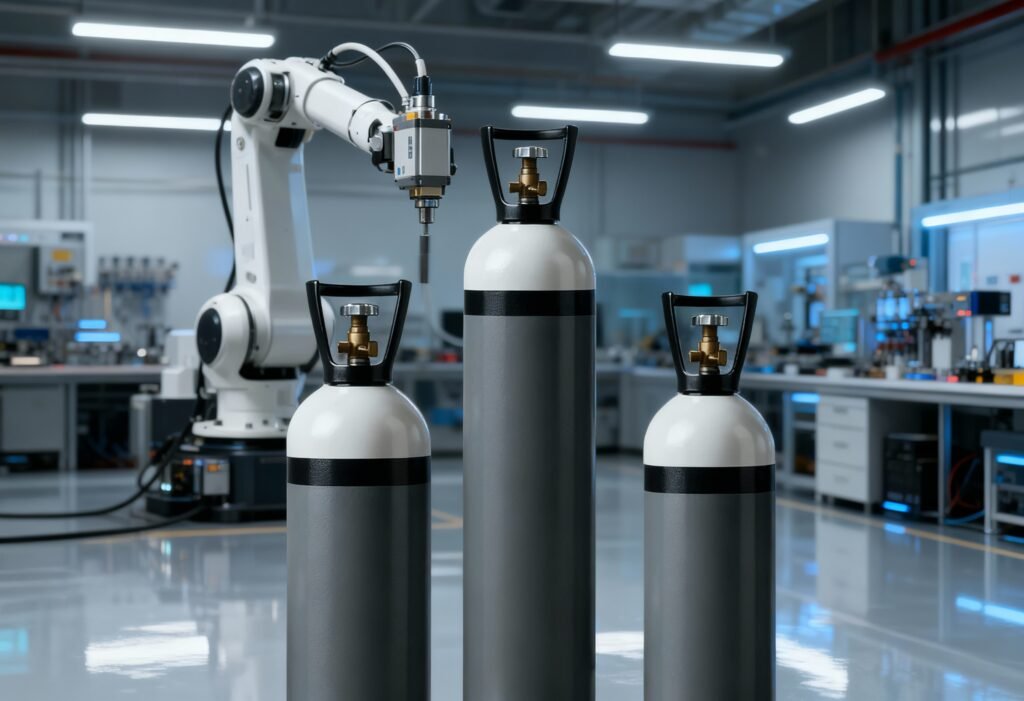
Adams Gas supplies a comprehensive range of 200 Bar compressed air cylinders for
industrial, technical, and commercial use across the UK. All cylinders are rent-free, UK
colour-coded, and not suitable for breathing purposes. Designed for performance,
durability, and compliance, our steel gas cylinders deliver reliable, consistent supply for
non-respiratory applications like brazing, testing, carbon coating, and tool actuation.
What Are Compressed Air Cylinders and Their Industrial Applications?
Compressed air cylinders serve as essential equipment for storing and delivering
gas under high pressure in industrial environments. These steel cylinders contain compressed air consisting
of 21% oxygen in nitrogen, specifically manufactured for non-breathing commercial applications</ strong>.
When combined with a fuel gas, compressed air produces a flame with a lower
temperature than oxy-fuel systems—perfect for brazing and heating processes. The robust
construction and cylinder valve systems are tested to handle
demanding operational conditions with safety and precision.
Why Choose Steel Cylinders for Industrial Gas Supply?
Steel cylinders are preferred for industrial gas due to their durable
construction, pressure resistance, and cost-effectiveness. Unlike lightweight composite cylinders,
steel units are built to endure impact, environmental stress, and long-term wear without compromising
safety or performance.
They’re ideal for stationary workshops, fixed installations, and environments
where strength, reliability, and gas security matter most. This makes them an ideal solution for long-term use in tough
commercial settings.
What Size Options Are Available?
Adams Gas offers
compressed air cylinders in various capacities to suit different needs:
- 2L – Lightweight, ideal for
testing or mobile use - 10L – Perfect for general tool work or workshop setups
- 20L – Balanced capacity for
mid-scale use - 50L – High-demand and long-cycle industrial jobs
Coming Soon: 9-Cylinder Pack and 16-Cylinder
Pack for larger setups.
How Do You Ensure Reliable Compressed Gas Delivery?
To ensure consistent compressed gas supply, it’s essential to use correct
cylinder valves, high-quality regulators, and follow ISO maintenance practices. Our
cylinders are guaranteed for over 2,000 valve cycles and meet stringent UK and European test standards.</ 1 p>
We recommend storing cylinders in cool, upright positions and regularly inspecting valve threads
and connections before use to maintain safe and reliable operation.
What Steel Cylinder Specs Should You Know?
Each
Adams Gas steel cylinder is manufactured to hold 200 Bar working pressure and tested
to 300 Bar. Sizes range from 2L to 50L. Compact cylinders are under 3kg, while large cylinders weigh over
20kg. Dimensions vary by model to support use in confined or mobile environments.
What Valve Options Work Best?
We use industry standard 5/8” BSP RH Cone valves on most cylinders. Options include basic on/off valves and enhanced RPV
(residual pressure valve) models. All valves feature safety-tested locking handwheels to prevent accidental
opening during handling.
How Do Steel and Carbon Composite Cylinders Compare?</ summary>
While composite cylinders offer weight savings, steel cylinders</ strong> provide unmatched durability and value for most industrial settings. Steel is the
go-to choice when reliability, longevity, and safety are non-negotiable, especially in stationary
installations.
What Delivery Options Are Available in the UK?
We
offer nationwide delivery across the UK via
courier and dedicated Adams Gas vehicles. You can also collect from one of our approved stockists.
How to Choose the Right Cylinder?
Determine your
application, pressure requirements, available space, and valve compatibility. Then browse our full compressed air range and select based on litres, weight,
and usage time. Our team can help guide you if you’re unsure.
What Makes Adams Gas Industrial Cylinders Reliable?
Each cylinder is built from certified steel, tested at high pressure, and complies with ISO and UK
regulations. With 200 Bar capacity, robust wall thickness, and industrial-grade
valves, Adams Gas cylinders are a trusted choice for mission-critical workflows.
Key Points to Remember
- All cylinders are 200 Bar, high-pressure steel models
- Strictly non-breathing, not suitable for SCBA or medical use
- UK 2025 colour coded – white
shoulder, black ring - Available in 2L, 10L, 20L, and 50L sizes
- Rent-free system – refundable
deposit, no rental charges - Compatible with standard BSP RH Cone valves
- Tested for
reliability, pressure containment, and valve integrity - Next-day UK delivery and collection available</ li>
- Ideal for brazing, coating, tool power, and testing systems