
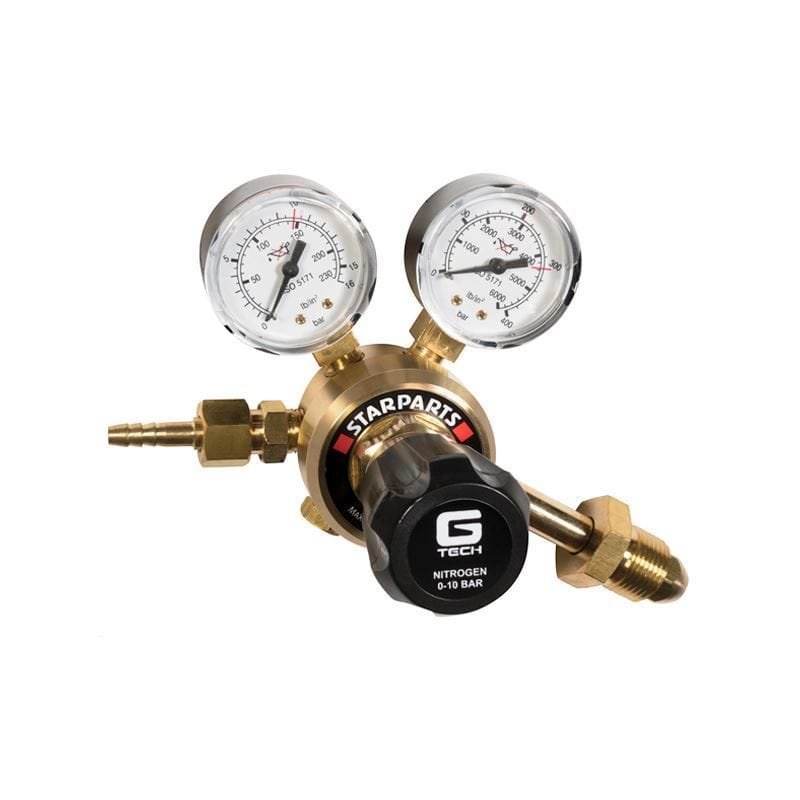
300 Bar Single-Stage Nitrogen Regulator – 10 LPM Flow, Twin Gauge Design
£40.00 + VAT
This 300 Bar Single-Stage Nitrogen Regulator is designed for reliable, controlled delivery of nitrogen at flow rates up to 10 LPM, making it ideal for a wide range of industrial, HVAC, pressure...
-
Gas Type: Nitrogen (N₂)
-
Regulator Type: Single-stage nitrogen regulator
-
Maximum Inlet Pressure: 300 bar
-
Flow Rate: Up to 10 LPM
-
Gauges: Parallel-threaded dual pressure gauges for accurate inlet and outlet monitoring
-
Outlet Connection: Standard 3/8″ BSP
-
Inlet Connection: 5/8″ BSP (industry-standard nitrogen fitting)
-
Construction: Durable, high-quality brass and steel components for long service life
-
Use Case: Suitable for nitrogen inerting, purging, pressure testing, HVAC work, and general industrial applications
Reliable 300 Bar Nitrogen Regulation – Buy Now
-
Single-Stage Precision Control – Provides stable nitrogen regulation for consistent flow up to 10 LPM.
-
Dual Parallel-Threaded Gauges – Easy-to-read gauges monitor both inlet and outlet pressures for safe, accurate operation.
-
300 Bar Maximum Inlet Pressure – Built to handle high-pressure nitrogen cylinders with reliability and confidence.
-
Standard 3/8″ BSP Outlet – Compatible with a wide range of nitrogen hoses and equipment.
-
5/8″ BSP Inlet Connection – Industry-standard nitrogen inlet fitting ensures secure, leak-free attachment.
-
Durable Industrial Construction – Made from robust materials for long-lasting performance in demanding environments.
-
Versatile Applications – Ideal for inerting, purging, HVAC servicing, pressure testing and general industrial nitrogen use.
This nitrogen regulator is suitable for a wide range of industrial, technical and specialist tasks, including:
-
HVAC & Refrigeration Work – Ideal for purging, pressure testing and leak checking refrigeration and air-conditioning systems.
-
Nitrogen Inerting – Used to create an oxygen-free environment for processes that require safe, inert atmospheres.
-
Pressure Testing – Suitable for controlled pressurisation of pipework, vessels and closed systems.
-
Purging & Flushing – Effective for clearing contaminants, moisture and oxygen from gas lines and equipment.
-
Laboratory & Technical Use – Reliable nitrogen control for bench work, calibration setups and research applications.
-
Industrial Maintenance – Suitable for nitrogen-based cleaning, testing and system servicing across various industries.
-
General Engineering Applications – Useful wherever stable nitrogen flow and accurate pressure monitoring are required.
Explore
Related products

8809, CAMPING GAS REGULATOR LP
High-quality gas bottles engineered for safety, portability and efficiency.
£7.58

TIG 9 Accessory Kit
High-quality gas bottles engineered for safety, portability and efficiency.
£21.66

AEARGBN Argon to CO2 Adaptor
High-quality gas bottles engineered for safety, portability and efficiency.
£28.75
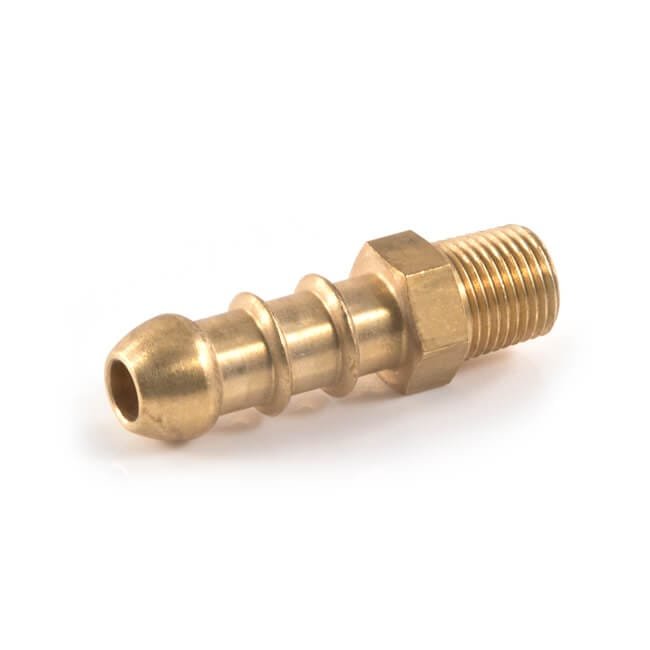
6246, Fulham Gas Hose Nozzle – 1/4″ BSP TM x 10mm
High-quality gas bottles engineered for safety, portability and efficiency.
£3.68
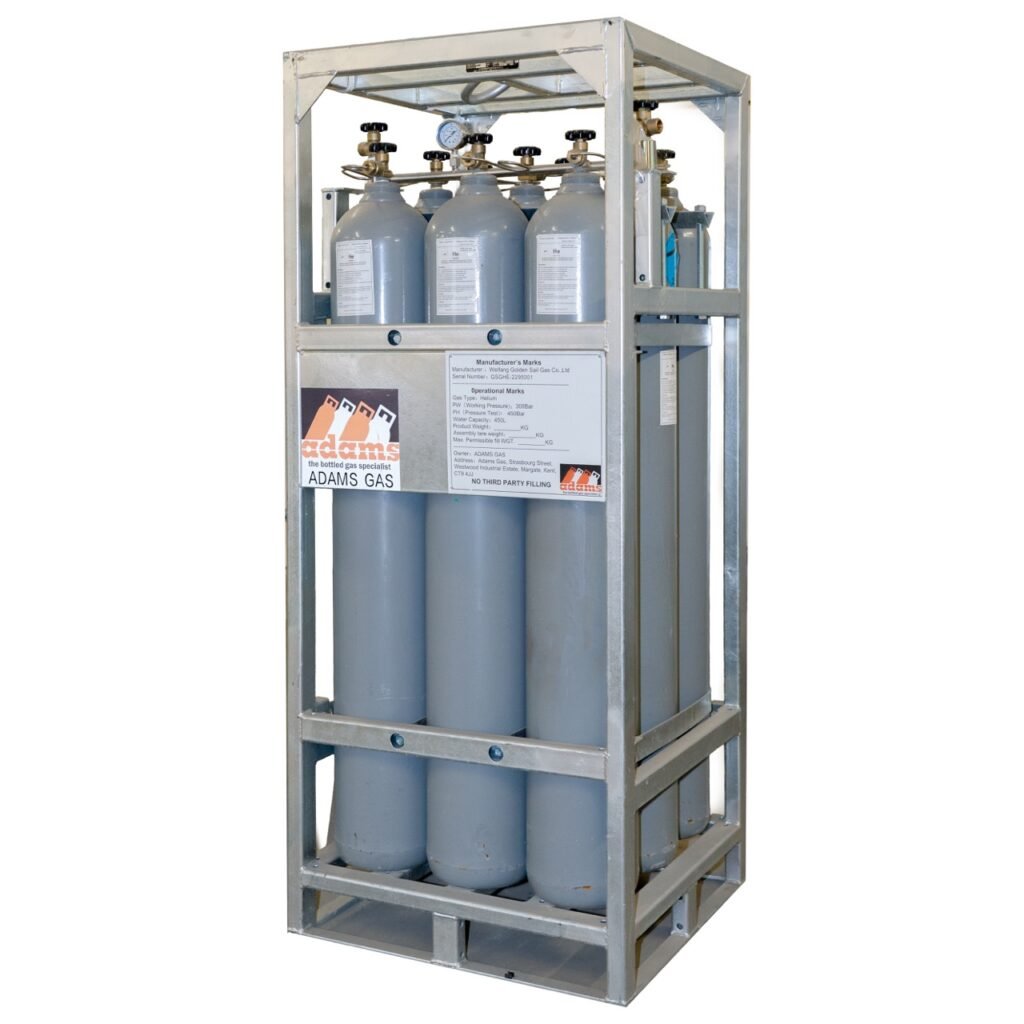
450L
Nitrogen (OFN) Food Grade Gas Manifold Pack – 9 Cylinders
High-quality gas bottles engineered for safety, portability and efficiency.
£360.50

8872, Fulham Gas Hose Nozzle – 3/8″ BSP F x 10mm
High-quality gas bottles engineered for safety, portability and efficiency.
£4.14
FAQs
As a trusted supplier of gas, we frequently get asked questions about gas safety, the difference between butane and propane, as well as the best uses for our gas products. In this blog, we’ll be answering our most common FAQs.
Yes, nitrogen is widely used for pressure testing and purging because it is inert and does not introduce moisture or oxygen into systems. This makes it suitable for testing pipework, HVAC systems, and other sealed environments. Adams Gas supplies nitrogen bottles commonly used for these professional applications.
The choice between oxy acetylene and oxy propane depends on how you work. Oxy acetylene is often preferred where a hotter, more concentrated flame is needed, while oxy propane is commonly chosen for cutting and heating due to its efficiency and lower running costs. Adams Gas supplies both options so users can the most suitable setup for their workflow.
Oxy acetylene remains a strong option for cutting, particularly where precision and faster pierce times are important. However, many professionals now use oxy propane for cutting steel due to its stability, lower fuel cost, and suitability for longer cutting operations. Adams Gas supports both approaches with reliable gas supply.
Cutting performance is influenced by fuel gas choice, oxygen purity, correct pressures, nozzle ion, and operator technique. Consistent gas quality plays a key role in achieving clean cuts and efficient operation. Using a trusted supplier like Adams Gas helps ensure dependable performance across jobs.
MIG/MAG (GMAW): Always uses shielding gas (unless flux-cored gasless wire)
TIG (GTAW): Always uses shielding gas (usually Argon)
MMA/Stick (SMAW): No external gas needed (flux coating provides shielding)
The right MIG welding gas depends on the material you are welding and the finish you want to achieve. Argon and CO2 mixes are commonly used for mild steel, while higher argon blends are better suited to stainless steel and aluminium. Adams Gas offers a wide range of MIG welding gases and can help customers choose the most suitable option for consistent, high quality results.
Pure CO2 is a cost effective option that delivers good penetration, but it can create more spatter and a rougher weld finish. Mixed gases cover cleaner welds, better arc stability, and improved control. Adams Gas supplies both pure CO2 and mixed gas options so welders can choose the right balance between performance and cost.
Pure argon is the most commonly used gas for TIG welding, as it provides a stable arc, clean welds, and precise control. It is suitable for welding materials such as aluminium, stainless steel, and mild steel. Adams Gas supplies high quality TIG welding argon to support consistent, professional results.
In most cases, TIG welding uses pure argon rather than mixed gases. However, certain specialist applications may use argon and helium blends to increase heat input, particularly for thicker materials. Adams Gas offers TIG welding gas options suitable for both standard and more advanced TIG welding requirements.
Yes, TIG welding gas has a direct impact on arc stability, weld appearance, and overall weld quality. Using clean, high purity gas helps prevent contamination, porosity, and inconsistent results. Choosing a reliable supplier like Adams Gas ensures the gas performs consistently across different TIG welding projects.
Nitrogen bottles are commonly ed for applications that require an inert, dry, and stable gas supply. These include pressure testing, purging, leak detection support, tyre inflation, laboratory use, and certain industrial processes. Adams Gas supplies nitrogen bottles suitable for professional and trade applications where consistency and reliability are essential.
Choosing the correct nitrogen bottle size depends on usage volume, flow requirements, and whether mobility or reduced changeovers is the priority. Smaller bottles suit site work and intermittent use, while larger cylinders are more efficient for workshops and continuous applications. Adams Gas offers nitrogen bottles in multiple sizes to support different working environments.